
Is Meta Banning Third-Party AI Chatbot From Whatsapp
Table of Contents
What Meta Actually Clarified (And What It Didn’t)
Why This Turned Into “Meta Is Removing AI Chatbots”
What Businesses Should Do Now (To Avoid Bans + Instability)
The Takeaway: This Is About Stability, Not AI

Author: Christopher Yip
I have many years experience in the software and internet industry. Since 2009, my team and I have helped organizations simplify daily work with practical software solutions - so teams can move faster, reduce manual work, and scale with better control.
Date Published: 11 Feb 2026

The past few weeks have seen a flurry of social media posts in the WhatsApp automation space, giving the impression that Meta is about to ban third-party AI chatbots on WhatsApp - which understandably alarms businesses that rely on AI for customer support. But once you look at what Meta is actually enforcing, the story gets a lot clearer:
What Meta Actually Clarified (And What It Didn’t)
👉 Meta has not announced a global “AI chatbot ban” on WhatsApp. There’s no new rule that blocks things like:
AI replies for customer support
AI workflows and automation logic
AI-assisted sales conversations
FAQ bots, routing bots, or agent-assist AI
What Meta is doing is reinforcing a long-standing requirement that’s always been true for WhatsApp automation:
Why This Turned Into “Meta Is Removing AI Chatbots”
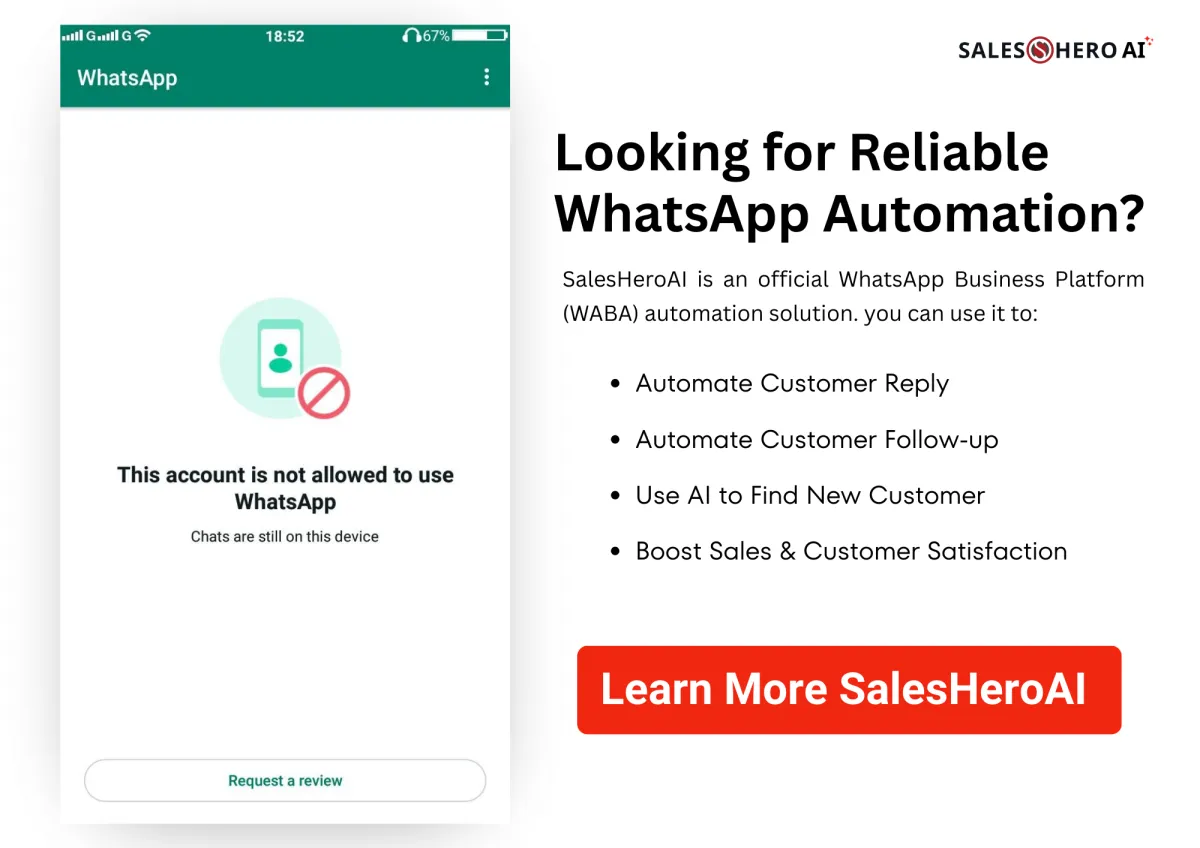
A big chunk of tools labeled as “third-party WhatsApp AI chatbots” aren’t built on the official WhatsApp Business Platform at all. Instead, many rely on approaches like:
Using WhatsApp Personal accounts (not WABA)
Browser automation that mimics WhatsApp Web
“Connect your phone” / session-based QR login flows
Scraping, reverse-engineered behavior, or unofficial wrappers
Methods that look a lot like session hijacking or automation masking
And here’s the catch: These methods have always been risky - because they bypass WhatsApp’s official APIs and governance.
What Businesses Should Do Now (To Avoid Bans + Instability)
1) Confirm you’re actually on WABA (WhatsApp Business Account)
👉 Ask your vendor directly:
“Are we connected through the official WhatsApp Business Platform API?”
“Which BSP are you using?”
“Can we view the WABA account and business verification details?
If the answers are vague, overly salesy, or dodge the question - treat that as a red flag.
2) Put guardrails around AI (even if you’re compliant)
AI isn’t the “risk” - but uncontrolled conversations can create risk (policy, brand, and deliverability). Add these basics:
Confidence thresholds (when AI is unsure, route to a human)
Handover rules (sales-ready, complaint, sensitive topics)
Rate control (avoid sudden spikes)
Audit logs (what the AI said and why)
3) Design for “WhatsApp reality,” not chatbot fantasy
WhatsApp works best when experiences are structured:
Define the top intents (support, sales, onboarding)
Keep messages short and purposeful
Use templates strategically
Confirm consent and expectations early
Make escalation easy
This improves both conversion and deliverability.
The Takeaway: This Is About Stability, Not AI
The most useful way to frame what’s happening:
❌ Meta isn’t cracking down on AI chatbots.
✅ Meta is making it harder for unofficial automation to survive.
For businesses, that means one thing: If your automation is WABA-based and well-governed, you’re building on solid ground.
Want to implement compliant WhatsApp automation without risking bans or instability?
👉 Book a free consultation with our WhatsApp automation expert